
Introduction
In the Twenty First century East Lothian remains predominantly a rural county just as it was in 1939. Most of its inhabitants worked in farming, its associated trades, down one of its many coal mines situated to the west of the county or as fishermen sailing from a port like Dunbar or Port Seton. Life here was spent largely though not exclusively at the pace of the horse or tractor and, compared to many other British counties, its war was to be a fairly quiet one.
However, still waters run deep. Lying as it does just east of Scotland’s capital, Edinburgh, and within distant sight of the great naval base of Rosyth and the towering ironwork of the Forth Rail Bridge, East Lothian was to have its moments.
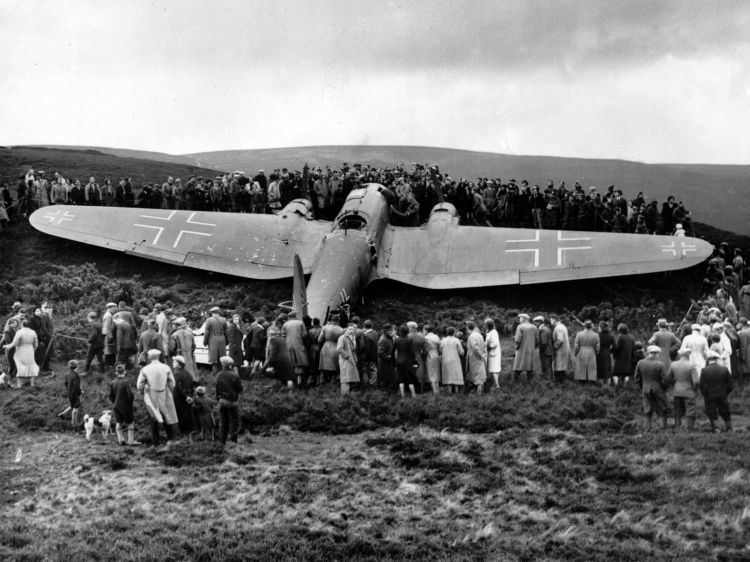
By a strange quirk of fate East Lothian played host to some of its more dramatic experiences at the very beginning and the very end of the war. Aerial bombing of the UK mainland was to commence over its skies and the first German aircraft to be shot down on the mainland fell on Kidlaw, not far from the small village of Humbie.
In 1945 three JU 52s, painted white for ease of identification, ferried German staff officers to Drem to sign the surrender of all German military forces in Norway. That these forces had remained in Norway in the first place was a tribute to the success of Operation Fortitude North, the northern part of the allied deception plan preparatory to the D-Day landings and largely carried out from the Lothians.
In between these significant events lay a county experiencing a world war: its inhabitants undergoing all the worries, irritants and excitements of a people playing their part in the depths of this cruel contest between life and death. To fight or train alongside them came men and women from all over the world. The graveyards of East Lothian play sad host to men and women from countries as far apart as Poland, New Zealand, South Africa and Canada. East Lothian had its war.
In between these significant events lay a county experiencing a world war: its inhabitants undergoing all the worries, irritants and excitements of a people playing their part in the depths of this cruel contest between life and death. To fight or train alongside them came men and women from all over the world. The graveyards of East Lothian play sad host to men and women from countries as far apart as Poland, New Zealand, South Africa and Canada. East Lothian had its war.
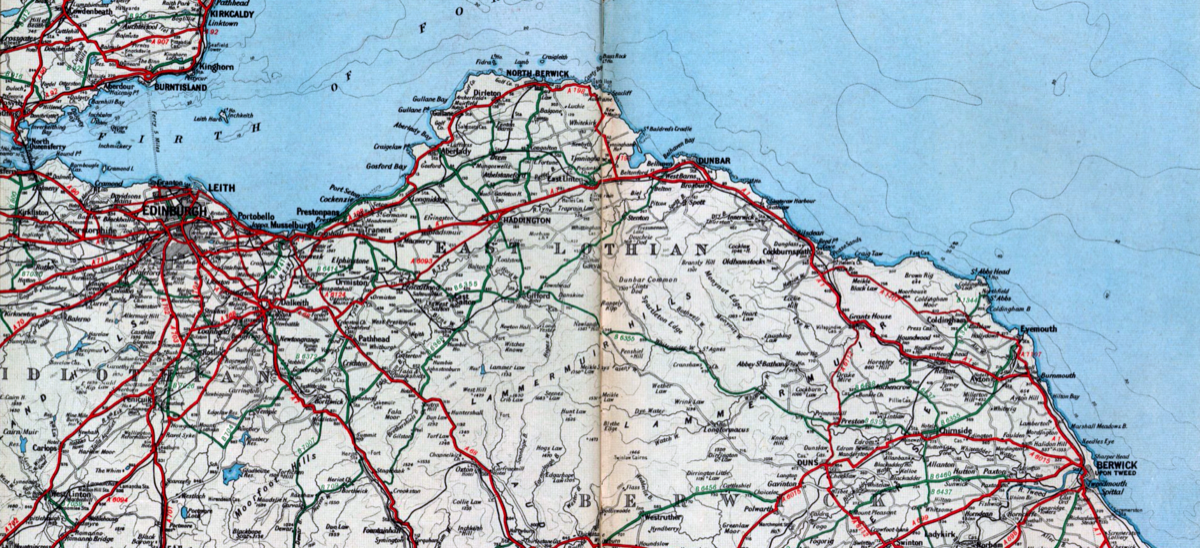
The rural county of East Lothian sits on the southern coastline of the Firth of Forth in eastern Scotland.
The aim of this website is to bring the actions and experiences of those who lived through the Second World War in East Lothian to wider notice.
This will be done through:–
This will be done through:–
- A History of Events
- Eyewitness Accounts
- Photographs
Please access the site menu by clicking on
the three black bars at the top right of this page.
The development of this site is an on-going process and will probably never be completed! Please be patient and revisit to discover updates, which are listed below in the Progress Diary.
Progress Diary - latest entry: 29 May, 2026
May 2026 - Air Accidents section. Loss of B-17 - Nephew of Michael Roskovich and his son lay a wreath in his memory.
May 2026 - Whittingehame Farm School - Additional information about Josef Potaschmacher and sisters, Sonja and Ursula Ibermann thanks to Dr Franz-Josef Wittstamm
May 2026 - Whittingehame Farm School - an account added of the wartime experiences of Karl Krumbein, present at the arrest of Rudolf Höss, former Commandant of Auschwitz-Berkenau.
April, 2026 - Whittingehame Farm School - further information about Viktor Förder from Dr Franz-Josef Wittstamm
Feb. 2026 - Whittingehame Farm School - two refugees made it there thanks to Sir Nicholas Winton.
Jan. 2026 - Inclusion of two photos in the Gosford PoW camp section of a wood working plane made by prisoner Hans Willi.
Jan. 2026 - Small changes to Juliette Liska's information in the Vaclav Jicha section of Air Accidents.
Jan. 2025 - Section on P/O Alan Downer's crash at Buxley Farm, 20th July 1939, in Air Accidents section.
Jan. 2026 - Additional evidence and photos about Václav Jícha in the Air Accidents section.
Jan. 2026 - Further information about Jedburgh training at Belhaven, STS 54b, in the Special Operations Executive section.
Jan. 2026 - Photo of a Dispatch rider at end of Gosford PoW camp section.
Jan. 2026 - Additional photographs and information of the Auxiliary Fire Service Haddington in the Civilian Forces section.
Jan. 2026 - Additional photographs and information about Commando Harry Homburg (Drew) in the Personal Histories section.
Jan. 2026 - Photographs of Benjamin Nierenberger uploaded at the end of the Whittingehame section.
Dec. 2025 - Detail correction in Air Accidents - Václav Jícha
Nov.2025 - Photograph uploaded of Stevie Brent's cousin in Jewish Refugees section.
July 2025 - Dr Franz-Josef Wittstamm provided nine new names of pupils who attended Whittingehame Farm School.
June 2025 - Photograph of the B-17 wreckage, Drem, uploaded in Air Crashes.
June 2025 - Two new photographs of the crashed Wellington at Bank Head Farm
June 2025 - Five new photographs of WLA members stationed at Saltoun Hall in 1942.
Jan. 2025 - Inclusion of two contact points for anyone wishing to enquire about or pass on information about PoWs in East Lothian or Officer Cadets in OCTU, Dunbar. Check the relevant pages. A similar contact point already exists for those interested in Jews who attended Whittingehame Farm School.
Jan. 2025 - New page in Air Accidents on the loss of Wellington LP760
Nov. 2024 - Some workers identified at Cunliffe Owen, Macmerry.
Oct. 2024 - New page in Personal Histories on Rev. Joe Ritchie's wartime experiences.
Oct. 2024 - New page in Air Accidents on CM Thorpe and BF Evans.
Oct. 2024 - New page in Air Accidents on Hampdens, L4089 & L4090.
Sept. 2024 - Significant photographs of the Canongate Boys Club added to the page 'Radio Padre' in Home Front section.
Sept. 2024 - Additional section on post-war radar development at Gin Head in 'Research and Testing' section.
Sept. 2024 - New page on the North Berwick Heinkel in 'German aircraft in the 'In the air' section.
Apr. 2024 - Additional material on the B-17 crash, Drem in Air Accidents.
Oct. 2020 - Website relaunched using Rapidweaver software.
27 Feb. 2013 - 1st Website launched.
May 2026 - Whittingehame Farm School - Additional information about Josef Potaschmacher and sisters, Sonja and Ursula Ibermann thanks to Dr Franz-Josef Wittstamm
May 2026 - Whittingehame Farm School - an account added of the wartime experiences of Karl Krumbein, present at the arrest of Rudolf Höss, former Commandant of Auschwitz-Berkenau.
April, 2026 - Whittingehame Farm School - further information about Viktor Förder from Dr Franz-Josef Wittstamm
Feb. 2026 - Whittingehame Farm School - two refugees made it there thanks to Sir Nicholas Winton.
Jan. 2026 - Inclusion of two photos in the Gosford PoW camp section of a wood working plane made by prisoner Hans Willi.
Jan. 2026 - Small changes to Juliette Liska's information in the Vaclav Jicha section of Air Accidents.
Jan. 2025 - Section on P/O Alan Downer's crash at Buxley Farm, 20th July 1939, in Air Accidents section.
Jan. 2026 - Additional evidence and photos about Václav Jícha in the Air Accidents section.
Jan. 2026 - Further information about Jedburgh training at Belhaven, STS 54b, in the Special Operations Executive section.
Jan. 2026 - Photo of a Dispatch rider at end of Gosford PoW camp section.
Jan. 2026 - Additional photographs and information of the Auxiliary Fire Service Haddington in the Civilian Forces section.
Jan. 2026 - Additional photographs and information about Commando Harry Homburg (Drew) in the Personal Histories section.
Jan. 2026 - Photographs of Benjamin Nierenberger uploaded at the end of the Whittingehame section.
Dec. 2025 - Detail correction in Air Accidents - Václav Jícha
Nov.2025 - Photograph uploaded of Stevie Brent's cousin in Jewish Refugees section.
July 2025 - Dr Franz-Josef Wittstamm provided nine new names of pupils who attended Whittingehame Farm School.
June 2025 - Photograph of the B-17 wreckage, Drem, uploaded in Air Crashes.
June 2025 - Two new photographs of the crashed Wellington at Bank Head Farm
June 2025 - Five new photographs of WLA members stationed at Saltoun Hall in 1942.
Jan. 2025 - Inclusion of two contact points for anyone wishing to enquire about or pass on information about PoWs in East Lothian or Officer Cadets in OCTU, Dunbar. Check the relevant pages. A similar contact point already exists for those interested in Jews who attended Whittingehame Farm School.
Jan. 2025 - New page in Air Accidents on the loss of Wellington LP760
Nov. 2024 - Some workers identified at Cunliffe Owen, Macmerry.
Oct. 2024 - New page in Personal Histories on Rev. Joe Ritchie's wartime experiences.
Oct. 2024 - New page in Air Accidents on CM Thorpe and BF Evans.
Oct. 2024 - New page in Air Accidents on Hampdens, L4089 & L4090.
Sept. 2024 - Significant photographs of the Canongate Boys Club added to the page 'Radio Padre' in Home Front section.
Sept. 2024 - Additional section on post-war radar development at Gin Head in 'Research and Testing' section.
Sept. 2024 - New page on the North Berwick Heinkel in 'German aircraft in the 'In the air' section.
Apr. 2024 - Additional material on the B-17 crash, Drem in Air Accidents.
Oct. 2020 - Website relaunched using Rapidweaver software.
27 Feb. 2013 - 1st Website launched.
Help Us - please!
It is hoped that you, the reader, will make your own contribution to this website. I would be very grateful for additional evidence and for notification of any errors or omissions. Please send such observations or contributions to the contact email address below. I will always acknowledge a contribution on the site when the source of this contribution is known.
Sources
The core information on this site is based on research carried out by a group based in Haddington which was inspired and organised by the late Jack Tully Jackson. Jack's initial website was a copy of two books written by Ian Brown and published under joint authorship. These were, “East Lothian at War Volume 1” & “East Lothian at War Volume 2”. [Now out of print]
A second version of The East Lothian at War website, compiled by David Haire, added additional information and used iWeb software. This version was soon outdated by IT developments and has been closed.
You are now visiting the third version of eastlothianatwar.co.uk, also compiled by David Haire.
Author And Thanks
Key to the second and third versions of the East Lothian at War website has been the knowledgeable guidance and assistance provided by Kevan Gordon of Fix my Mac, Tranent. The website wouldn't have got very far without his unselfish and generous help.
Of huge significance too, has been the financial assistance and support provided by Haddington History Society.
David Elder has provided many of the current photographs and the author of others has been indicated where known. My grateful thanks to them all.
The website is being maintained and expanded by David Haire, the site's custodian and author, who is adding additional information as his research allows.